

Table of Contents
Imagine running out of milk at 10 PM.
A few years ago, that meant waiting until the next morning or making a trip to a nearby store.
Today, you can open an app, place an order, and have it delivered before you finish watching a YouTube video.
That’s the power of quick commerce.
Over the last few years, India has witnessed a major shift in consumer behavior. People no longer want deliveries in days. They don’t even want deliveries in hours. They want everything in minutes.
And two companies are leading this transformation: Blinkit and Zepto.
Both promise ultra-fast deliveries. Both operate massive networks of dark stores. Both are spending heavily to win customers. And both are competing for the same goal: becoming India’s go-to platform for instant delivery.
But here’s the interesting part.
Behind the 10-minute delivery promise lies a sophisticated business model involving technology, logistics, inventory forecasting, dark stores, and unit economics.
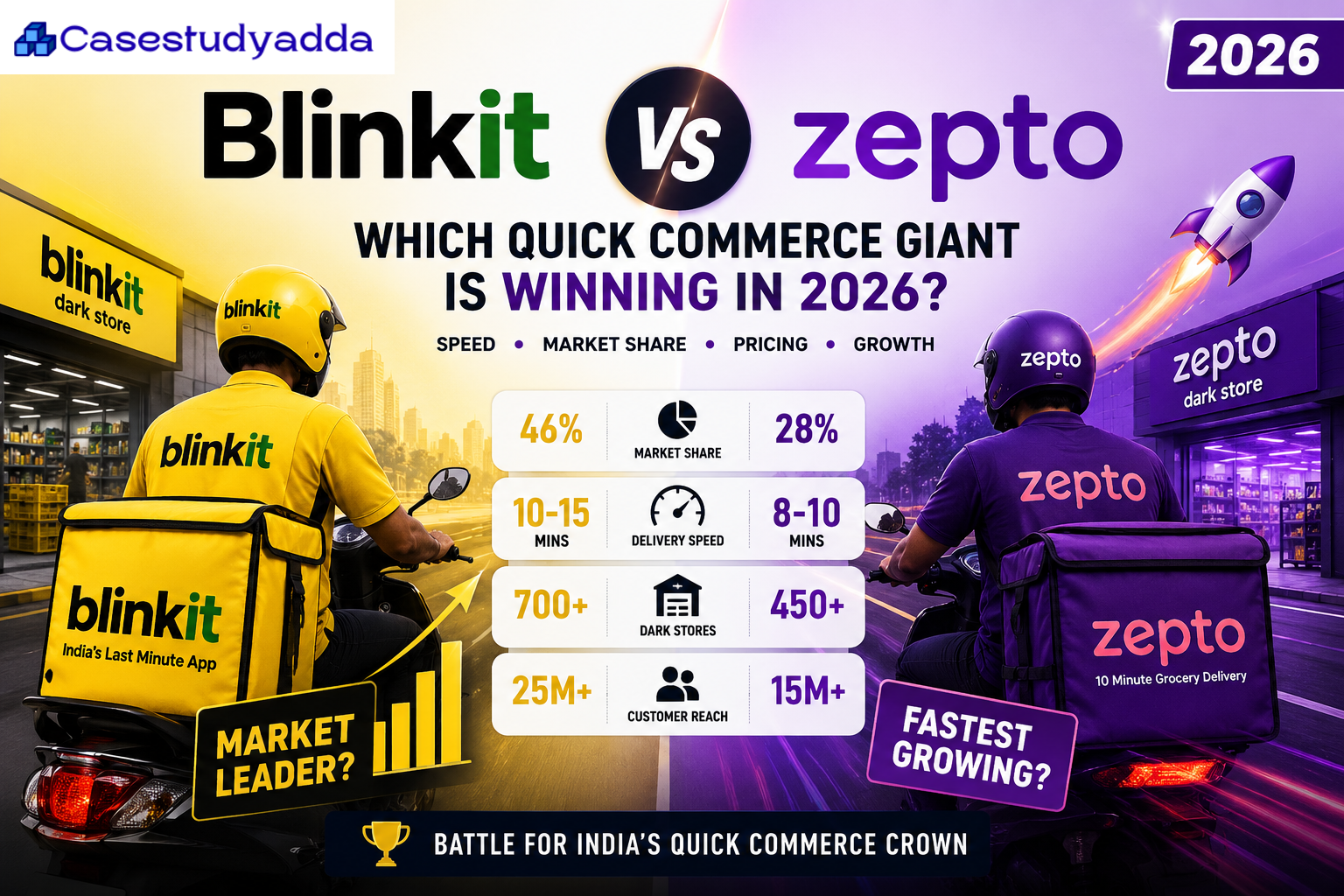
So which platform is better? Which business model is stronger? And who is winning India’s quick commerce war in 2026?
Let’s break it down.
What Is Quick Commerce?
Before comparing Blinkit and Zepto, it’s important to understand the industry they’re competing in.
Quick commerce, often called Q-commerce, is a form of ecommerce focused on delivering products within 10 to 30 minutes.
Unlike traditional ecommerce companies that ship products from large warehouses located far from customers, quick commerce companies store inventory closer to residential areas.
The goal is simple:
Reduce the distance between products and customers.
The shorter the distance, the faster the delivery.
This model has transformed the way people purchase groceries, household essentials, medicines, snacks, and even electronics.
Today, some of the biggest players in India’s quick commerce market include:
- Blinkit
- Zepto
- Swiggy Instamart
- BigBasket Now
And competition is getting more intense every year.
What Is Blinkit?
Blinkit’s story didn’t start with quick commerce.
The company was originally launched as Grofers in 2013.
At that time, online grocery delivery was still a relatively new concept in India. The company focused on scheduled deliveries and gradually expanded its operations across multiple cities.
But consumer expectations changed.
People wanted faster deliveries.
Much faster.
Recognizing this shift, Grofers rebranded itself as Blinkit in 2021 and repositioned its entire business around instant delivery.
Today, Blinkit delivers:
- Groceries
- Fruits and vegetables
- Dairy products
- Personal care items
- Electronics
- Pet supplies
- Office stationery
- Kitchen essentials
- Medicines
The company is now backed by Zomato’s parent company, giving it access to a larger ecosystem and significant operational support.
What Is Zepto?
If Blinkit represents experience, Zepto represents speed.
Founded in 2021 by Aadit Palicha and Kaivalya Vohra, Zepto entered the market with a bold promise:
Deliver groceries in around 10 minutes.
Many people initially thought the idea was unrealistic.
Yet within a short period, Zepto expanded rapidly across major Indian cities and became one of the country’s fastest-growing startups.
What made Zepto different wasn’t just its delivery promise.
It was the company’s obsession with operational efficiency.
From inventory forecasting to route optimization, nearly every aspect of the business was designed around reducing delivery times.
Today, Zepto offers:
- Groceries
- Fresh produce
- Household essentials
- Baby care products
- Personal care products
- Kitchen items
- Electronics
And it continues expanding aggressively into new markets.
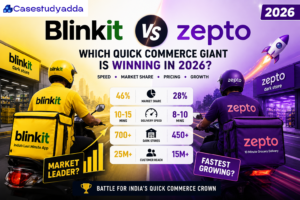
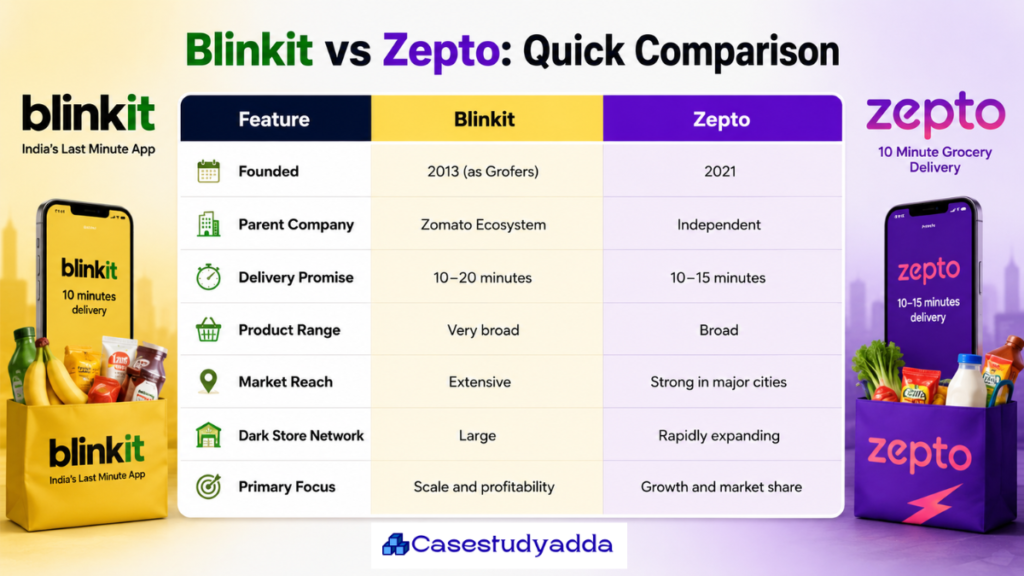
Blinkit vs Zepto: Quick Comparison
|
Feature |
Blinkit |
Zepto |
|
Founded |
2013 (as Grofers) |
2021 |
|
Parent Company |
Zomato Ecosystem |
Independent |
|
Delivery Promise |
10–20 minutes |
10–15 minutes |
|
Product Range |
Very broad |
Broad |
|
Market Reach |
Extensive |
Strong in major cities |
|
Dark Store Network |
Large |
Rapidly expanding |
|
Primary Focus |
Scale and profitability |
Growth and market share |
At first glance, both companies appear similar.
But when you dig deeper, you’ll notice meaningful differences in strategy and execution.
How Does Blinkit Work?
Blinkit’s biggest advantage isn’t its app.
It isn’t its discounts.
It’s its dark-store network.
These strategically located fulfillment centers allow products to remain close to customers, reducing delivery times dramatically.
Here’s how the process works.
Step 1: Customer Places an Order
A user selects products through the Blinkit app.
Step 2: Order Is Assigned to the Nearest Dark Store
The system identifies the closest fulfillment center with the required inventory.
Step 3: Picking and Packing Begins
Store employees quickly locate and pack the ordered items.
Step 4: Delivery Partner Receives the Order
A delivery executive is assigned and navigated to the store.
Step 5: Last-Mile Delivery
The order is delivered to the customer’s doorstep within minutes.
The entire process is optimized for speed.
Every second matters.
How Does Zepto Work?
The basic framework is similar to Blinkit.
But Zepto places a particularly strong emphasis on technology.
The company uses advanced forecasting models to predict local demand and stock products accordingly.
This reduces stockouts and improves delivery efficiency.
Its operational focus includes:
- Inventory optimization
- Route planning
- Demand forecasting
- Warehouse efficiency
- Hyperlocal fulfillment
The result is a system designed to move products from shelf to customer as quickly as possible.
What Are Dark Stores?
If quick commerce has a secret weapon, it’s the dark store.
Dark stores are small fulfillment centers designed exclusively for online orders.
Customers cannot walk into them like traditional supermarkets.
Instead, they function as micro-warehouses located near residential neighborhoods.
Their primary purpose is to:
- Store inventory close to customers
- Improve delivery speed
- Increase order accuracy
- Reduce logistics costs
Without dark stores, 10-minute delivery would be almost impossible.
They’re the backbone of the entire quick commerce industry.
Blinkit vs Zepto: Product Selection
Speed gets users to download the app.
Product variety keeps them coming back.
This is where Blinkit has traditionally maintained an advantage.
Beyond groceries, Blinkit has expanded aggressively into categories such as:
- Electronics
- Office supplies
- Kitchen appliances
- Mobile accessories
- Pet products
- Personal care items
The broader catalog increases customer convenience and encourages larger order values.
Zepto also offers a strong product selection but remains more focused on everyday essentials.
Winner: Blinkit
If product variety matters to you, Blinkit generally offers more options.
Blinkit vs Zepto: Delivery Speed
Let’s address the biggest question.
Which app is faster?
The answer depends on several factors:
- Your location
- Traffic conditions
- Store proximity
- Order volume
- Inventory availability
In most metro cities, both platforms regularly complete deliveries within 10 to 15 minutes.
For customers, the difference is often too small to notice.
Winner: Tie
Both companies have built impressive delivery infrastructures.
Blinkit vs Zepto: Pricing and Discounts
Customers love convenience.
But they love savings too.
This is one area where Zepto has often been aggressive.
The company frequently uses discounts, promotional campaigns, and membership benefits to attract and retain customers.
Blinkit also runs promotions but tends to focus more on balancing growth with profitability.
As a result, many users find slightly better deals on Zepto for certain products.
Winner: Zepto
If you’re highly price-sensitive, Zepto may offer more attractive discounts.
Blinkit vs Zepto: User Experience
A quick commerce app should do three things well:
- Help users find products quickly
- Make checkout simple
- Provide accurate order tracking
Both platforms perform strongly in these areas.
Blinkit often stands out because of its broader catalog and product discovery features.
Zepto earns praise for its clean interface and streamlined shopping experience.
Winner: Tie
The better app ultimately comes down to personal preference.
How Do Blinkit and Zepto Make Money?
One of the most common questions about quick commerce is this:
How can companies deliver products so quickly and still make money?
The answer lies in multiple revenue streams.
Product Margins
Companies earn margins on products sold through their platforms.
Delivery Charges
Certain orders include delivery fees that contribute to revenue.
Convenience Fees
Additional service fees help offset operational expenses.
Advertising Revenue
Brands pay to promote products within the app.
Private Label Products
Selling in-house brands often generates higher profit margins.
The more customers order, the stronger these revenue streams become.
Why Is Quick Commerce Growing So Fast in India?
The rise of quick commerce isn’t happening by accident.
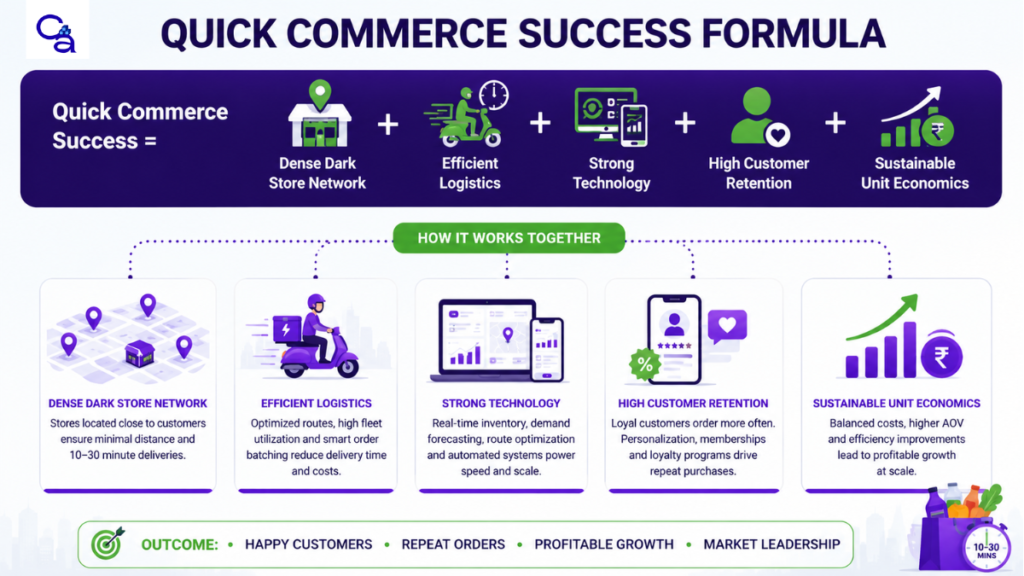
Several powerful trends are driving growth.
Busy Urban Lifestyles
Consumers increasingly value convenience and time savings.
Smartphone Adoption
Mobile-first shopping continues to grow across India.
Better Logistics Infrastructure
Technology has made rapid deliveries more efficient than ever before.
Changing Consumer Expectations
Once people experience 10-minute delivery, waiting days for essentials feels inconvenient.
This behavioral shift is one of the biggest reasons the industry continues expanding.
What Challenges Do Blinkit and Zepto Face?
Despite rapid growth, quick commerce remains a challenging business.
High Operational Costs
Maintaining hundreds of dark stores requires substantial investment.
Delivery Expenses
Last-mile logistics remain one of the largest cost centers.
Intense Competition
Multiple players are fighting aggressively for market share.
Profitability Pressure
Investors increasingly expect sustainable business models rather than growth at any cost.
The companies that successfully balance speed, scale, and profitability are likely to emerge as long-term winners.
Blinkit vs Zepto: Which Company Has the Better Business Model?
This is where things get interesting.
Blinkit benefits from:
- Operational experience
- Strong ecosystem support
- Larger scale
- Broader product categories
Zepto benefits from:
- Startup agility
- Technology-driven execution
- Rapid expansion
- Strong customer acquisition
Blinkit’s advantage lies in scale.
Zepto’s advantage lies in speed and innovation.
At the moment, Blinkit’s ecosystem strength provides a slight edge, but the competition remains extremely close.
Which Platform Is Better for Customers?
Choose Blinkit if you:
- Want a wider product selection
- Frequently order non-grocery items
- Prefer a mature ecosystem
Choose Zepto if you:
- Prioritize discounts
- Focus primarily on groceries
- Value extremely fast delivery
For many consumers, the smartest strategy is simple:
Compare prices on both apps before placing an order.
The better deal often changes depending on your location and the products you’re buying.
What Does the Future Hold for Blinkit and Zepto?
The next phase of quick commerce will likely focus on more than speed.
Future growth will be driven by:
- AI-powered inventory management
- Better demand forecasting
- Expansion into smaller cities
- Higher-margin private labels
- Improved operational efficiency
- Sustainable profitability
The companies that master these areas will shape the future of Indian retail.
Conclusion
A few years ago, getting groceries delivered in 10 minutes sounded impossible.
Today, millions of Indians expect it.
That’s how quickly consumer behavior has evolved.
Blinkit and Zepto are not simply competing with each other.
They’re competing to define the future of convenience.
Blinkit currently holds advantages in scale, product variety, and ecosystem support. Zepto continues to challenge aggressively through innovation, execution, and rapid expansion.
The reality is that both companies are helping build one of India’s fastest-growing digital industries.
And as competition intensifies, consumers will likely benefit from faster deliveries, better service, and more competitive pricing.
Whether Blinkit or Zepto ultimately becomes the long-term leader remains uncertain.
But one thing is clear.
Quick commerce is no longer a trend.
It’s becoming the new normal.
FAQs
Is Blinkit bigger than Zepto?
Blinkit generally has a larger operational footprint and broader product catalog.
Which app delivers faster?
Both platforms typically deliver within 10–15 minutes in major cities.
Is Zepto profitable?
Zepto continues working toward profitability while maintaining rapid expansion.
Why are Blinkit and Zepto called quick commerce companies?
Because they focus on delivering products within minutes rather than days.
Can Blinkit and Zepto survive long term?
Their future depends on balancing growth, profitability, and customer satisfaction while continuing to improve operational efficiency.