

Table of Contents
The Indian Rupee has recently touched weak levels against the US Dollar, leading many people to ask questions like:
- Why is the Indian Rupee falling today?
- What is the reason for rupee depreciation?
- When will the Indian Rupee recover against the dollar?
- What is the impact of a falling rupee on the Indian economy?
A falling rupee affects fuel prices, imports, inflation, foreign travel, businesses, and household expenses. The value of the rupee changes because of both global and domestic economic factors.

What Does a Weak Rupee Mean?
A weak rupee means the Indian currency has lost value compared to the US Dollar.
Example:
- Earlier: $1 = ₹80
- Now: $1 = ₹90+
This means Indians now need more rupees to buy one dollar.
A weaker rupee can:
- Increase import costs
- Raise fuel prices
- Increase inflation
- Make foreign travel expensive
At the same time, export industries may benefit.
How much Rupee has Depreciated in the Last 10 Years?
Year | Approximate USD to INR Rate |
2010 | ₹45 |
2013 | ₹60 |
2016 | ₹67 |
2020 | ₹75 |
2023 | ₹82 |
2026 | ₹85+ |
This shows that the rupee has gradually weakened over time due to inflation, rising imports, and global economic changes.
Top 5 reasons why Indian Rupee Is falling?

1. Strong US Dollar
The US Dollar has become stronger globally because:
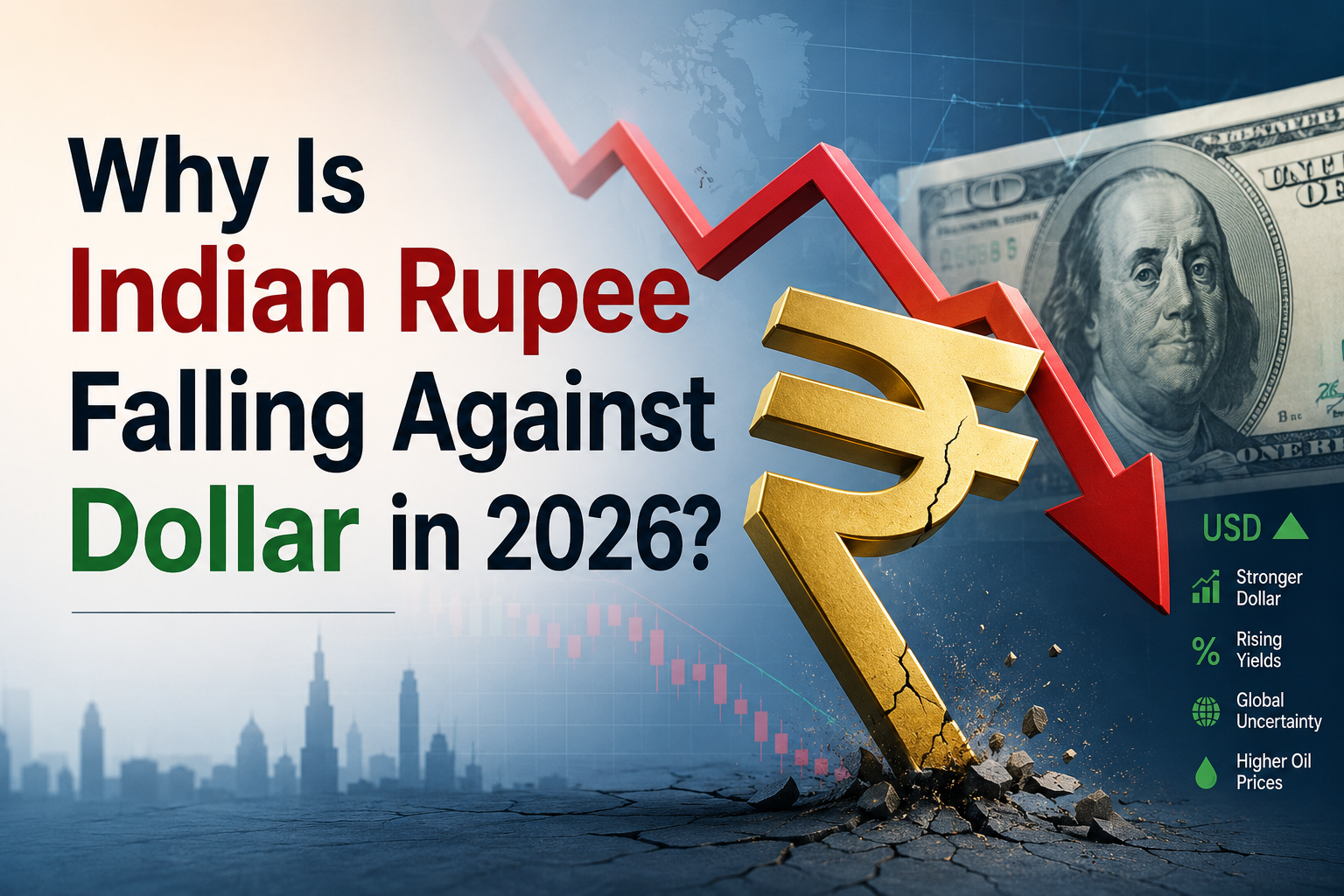
- US interest rates are higher
- Investors consider the dollar safer
- Global trade mainly happens in dollars
This is one of the biggest reasons why the Indian Rupee is falling against the dollar.
2. Rising Crude Oil Prices
India imports most of its crude oil. Since oil payments are made in dollars, India needs more dollars when oil prices rise.
This increases:
- Fuel prices
- Import bills
- Pressure on the rupee
3. Foreign Investor Outflows
During uncertain economic conditions, foreign investors often move money to safer markets like the United States.
When investors sell Indian assets and convert rupees into dollars, the rupee weakens further.
This also affects Indian stock markets like:
- NIFTY 50
- BSE SENSEX
4. Inflation Pressure
High inflation reduces the purchasing power of money over time. If inflation remains high for long periods, the currency naturally loses value.
5. Global Economic Uncertainty
Global recession fears, wars, slow trade growth, and financial instability increase demand for the US Dollar and weaken developing market currencies like the rupee.
Which Currencies are Falling Against the Dollar?
India is not alone. Many currencies have weakened against the US Dollar, including:
- Japanese Yen
- Pakistani Rupee
- Euro
- South Korean Won
- Chinese Yuan
This shows that the strong dollar is affecting currencies globally.
What is the Impact of Falling Rupee on Common People?
A weak rupee increases the cost of:
- Fuel
- Imported products
- Foreign education
- International travel
- Electronics and gadgets
Products like smartphones, laptops, and imported goods become more expensive.
Household expenses may also rise because transportation, logistics, and daily goods become costlier.
Why a Falling Rupee Is Good News for Some Industries?
Some sectors who are Export-Driven Industries Prefer a Weak Rupee because they earn revenue in dollars. Those industries are –
1. IT Sector
Companies like Infosys and Tata Consultancy Services earn in foreign currencies, so profits can improve when the rupee weakens.
2. Pharmaceutical Industry
Indian pharmaceutical exporters can earn higher revenues from international markets.
3. Textile and Tourism Sector
Indian products and travel become cheaper for foreign buyers and tourists, increasing export and tourism opportunities.
Industries Facing Heavy Losses Due to Rupee Depreciation
1. Aviation
Airlines face higher fuel and maintenance costs.
2. Oil Companies
Crude oil imports become more expensive.
3. Electronics Industry
Imported components and devices cost more.
4. Automobile Industry
Companies depending on imported parts face increased production costs.
What Is RBI Doing to Control Rupee Fall?
The Reserve Bank of India regularly takes measures to stabilize the currency, including:
- Selling dollar reserves
- Controlling inflation
- Managing liquidity
- Encouraging foreign investment
- Monitoring forex markets
When will the Indian Rupee Recover against the Dollar?
The rupee may strengthen if:
- Oil prices decrease
- Inflation comes under control
- Exports increase
- Foreign investments rise
- Global uncertainty reduces
Currency values keep changing based on economic conditions and market confidence.
Is a Falling Rupee Always Bad?
Not always.
A weaker rupee can help:
- Export companies
- IT sector
- Tourism industry
The real problem occurs when the currency falls too quickly and creates economic instability.
What Are People Discussing on Quora and Reddit?
Searches related to the falling rupee have increased because people want simple explanations and real-world opinions.
Most discussions focus on:
- Inflation
- Oil prices
- Global recession fears
- Government policies
- RBI actions
- Impact on daily life
Future Outlook for Indian Rupee
Experts believe the rupee may remain under pressure in the short term because of strong dollar demand and global uncertainty.
However, India’s long-term economic growth potential remains strong due to rising exports, digital growth, infrastructure development, and a growing economy.
Frequently Asked Questions
Why is the Indian Rupee falling today?
The rupee is falling because of a strong US Dollar, rising oil prices, inflation, and foreign investor outflows.
What’s causing the Indian Rupee to fall against the dollar?
The dollar is becoming stronger globally due to higher US interest rates and strong investor confidence.
What is the reason for rupee depreciation today?
Major reasons include high oil prices, global uncertainty, inflation, and increasing dollar demand.
Can the Indian Rupee rise again against the US Dollar?
The rupee may recover if inflation decreases, exports rise, and global economic conditions improve.
What is the falling value of the Indian Rupee lecturette?
It usually refers to educational explanations about currency depreciation and its economic impact in simple language.