
Table of Contents
ToggleZudio Marketing Strategy Exposed: Affordable Fashion or Myth?
Zudio is one of the rare Indian fashion brands that broke every conventional marketing and retail rule and still won.
No influencers.
No discount banners.
No aggressive online presence.
Yet, Zudio stores are crowded, products sell out fast, and the brand continues expanding at a pace that even digitally native D2C brands struggle to match.
This blog unpacks how Zudio’s marketing, pricing psychology, brand positioning, and supply chain strategy work together as one system, not isolated tactics.
Zudio Marketing Strategy: No Influencers, No Ads and Still Viral
Zudio’s marketing strategy is not absent.It is fixed into the product, store, and consumer experience.
1. Visual Display as the Primary Marketing Channel
For Zudio, the store itself replaces advertising.
Key elements:
- Bright lighting and wide space
- High product density without clutter
- Color-blocked displays that catch attention instantly
- Front-loaded trend pieces near entry points
This design achieves two goals:
- Immediate visual excitement
- Faster decision-making
Customers don’t “browse”; they discover.
2. Store Placement as Growth Marketing
Zudio locations are smartly chosen:
- High-footfall streets
- Residential-commercial mixed zones
- Tier 2 and Tier 3 cities with limited fashion options
Instead of malls with high rentals, Zudio prefers:
- Standalone large stores
- Affordable real estate
- Visibility over prestige
This turns the store into a daily reminder brand, not an occasional shopping destination.
3. Word-of-Mouth as a System, Not Luck
Zudio products spark conversation because of price disbelief.
“₹299 mein yeh mil raha hai?” This reaction becomes organic promotion.
Zudio benefits from:
- Social sharing by customers, not creators
- Haul videos without paid partnerships
- Peer-to-peer recommendations
The brand doesn’t chase virality, it conditions where virality can not be ignored.
How Zudio Uses Pricing Psychology to Control Buying Behavior
Zudio’s pricing is not “cheap”. It is psychologically precise.
1. The ₹299–₹999 Sweet Spot
Most Zudio products fall within impulse-buy territory.
Examples:
- Tops at ₹299
- Jeans at ₹499–₹799
- Dresses under ₹999
This pricing removes:
- Comparison
- Guilt associated with spending
- Long decision cycles
Customers don’t ask, “Should I buy?”
They ask, “Why not buy two?”
2. Price as a Risk Reducer
Low price points reduce fashion risk.
If a trend fails:
- Financial loss feels nothing
- Experimentation increases
- Repeat visits become more frequent
Zudio converts uncertainty into curiosity.
3. No Discounts, No Waiting Game
Because prices are already low:
- There is no expectation of future discounts
- Customers buy immediately
- Inventory moves faster
This prevents the “sale-only buyer” mindset that damages most apparel brands.
Zudio Business Strategy : How Tata Built India’s Most Profitable Budget Fashion Brand
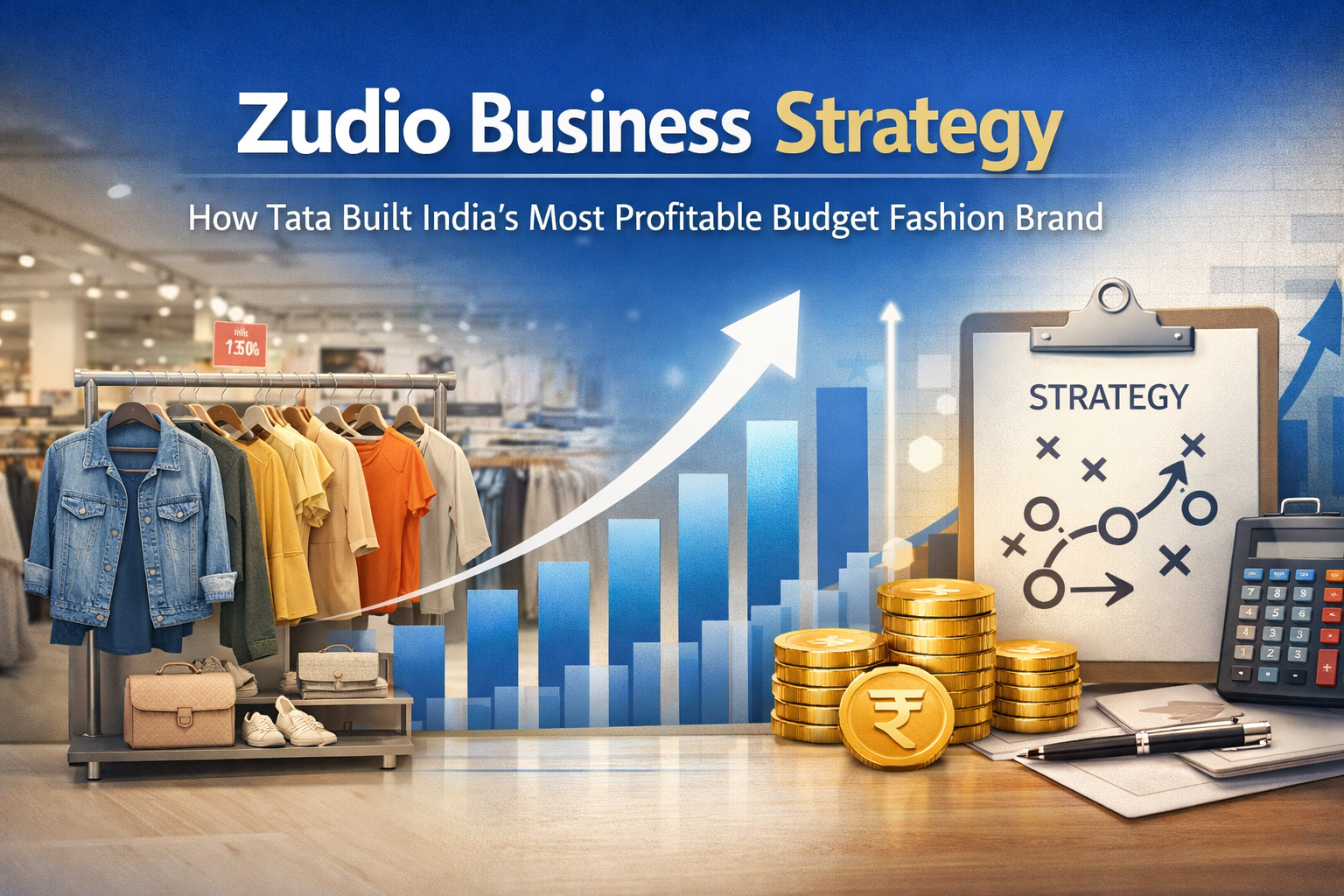
Zudio Business Strategy explained: how Tata built India’s most profitable budget fashion brand using cost control, store-led growth, and smart pricing.
Zudio Brand Positioning: Cheap or Smart Affordable?
Zudio’s biggest branding challenge is belief. Customers generally think – Is it cheap? Or is it intelligently affordable?
1. Aspirational Affordability
Zudio positions itself between:
- Street fashion aspiration
- Middle-class budget reality
The brand does not promise luxury.It promises relevance.
Customers feel:
- Trend-aware
- Style-conscious
- Financially sensible
This balance builds emotional trust.
2. Minimal Branding, Maximum Acceptance
Zudio avoids loud logos.
Designs are subtle.
Labels are quiet.
This allows customers to:
- Wear products without “budget brand” stigma
- Blend Zudio pieces with premium outfits
- Feel socially confident
Zudio sells fashion, not a price tag identity.
Why Zudio Never Focused on Online Sales (Yet)
In a world obsessed with e-commerce, Zudio’s offline-first approach looks easy but it is strategic.
1. Offline Protects Margins
Online fashion requires:
- Logistics
- Returns
- Heavy discounting
- Digital marketing spend
Zudio avoids all four.
By staying offline:
- Costs remain predictable
- Margins stay intact
- Volume compensates for low pricing
2. Zudio is Built for Touch-and-Feel Buying
Zudio thrives on:
- Trial rooms
- Visual browsing
- Impulse decisions
Online shopping removes:
- Sensory engagement
- Spontaneous discovery
- Bulk basket building
Offline keeps the brand’s psychology intact.
3. Future Omnichannel Possibility
Zudio’s silence on e-commerce does not mean resistance.
Possible future moves:
- Click-and-collect
- Limited online exclusives
- Store-linked digital catalogs
Zudio is waiting for economics to make sense, not trends.
Zudio Operations & Supply Chain Strategy
Zudio Supply Chain Strategy: Speed Over Variety
Zudio is often compared to fast fashion giants but its model is uniquely Indian.
1. Fewer SKUs, Faster Rotation
Unlike brands that launch thousands of designs:
- Zudio limits SKU variety
- Focuses on high-probability styles
- Rotates collections quickly
This reduces:
- Design risk
- Dead inventory
- Storage costs
2. Localized Production Advantage
Zudio leverages:
- Domestic suppliers
- Shorter lead times
- Faster feedback loops
Trend to shelf happens quicker without global complexity.
How Zudio Controls Fashion Risk in a Trend-Driven Market?
Fashion risk is the silent killer of apparel brands. Zudio balances it systematically.
1. Limited Design Bets
Zudio does not overcommit to trends. Initial production runs are small.
If it works:
- Restock fast
If it fails:
- Exit quietly
No emotional attachment to designs.
2. Data-Backed Strategy
Store-level sales data guides:
- What to restock
- What to discontinue
- What to modify
This keeps inventory clean and responsive.
Private Labels: Zudio’s Silent Profit Engine
Private labels are where Zudio quietly wins.
1. Full Control, Better Economics
Private labels allow:
- Higher margins
- Faster design decisions
- Zero brand royalty costs
Zudio owns:
- Design
- Sourcing
- Pricing
- Presentation
2. Brand Loyalty Shifts to Store, Not Logo
Customers don’t ask for a brand name.
They ask:
“Zudio mein mila kya?”
This makes Zudio the destination brand, not just a retailer.
Final Insight: Zudio Is a System, Not a Brand
Zudio’s success is not due to one tactic.
It is the result of:
- Marketing embedded in retail
- Pricing aligned with psychology
- Supply chain optimized for speed
- Branding focused on confidence, not status
Zudio didn’t copy global fashion models. It re-engineered them for Indian realities.
That is why it scales while others struggle.
Tune into Free Audio Guide Book
A playlist that will help you understand the concept of ” Digital Marketing”. We didn’t teach, we just clarify the concepts.

